
India and ASEAN have directed negotiating sub-committees to accelerate pending chapters of the ASEAN–India Trade in Goods Agreement review, with time-bound deliverables and the next Joint Committee meeting scheduled for January 2027. The outcome could shape market access, rules of origin, Customs procedures and the movement of goods across one of India’s most important regional trading relationships.
Make us preferred source on Google
Key Takeaways
- The 15th meeting of the ASEAN–India Trade in Goods Agreement (AITIGA) Joint Committee was held at the ASEAN Secretariat in Jakarta, Indonesia, from October 6 to 9, 2026.
- India and ASEAN directed all eight sub-committees to expedite pending chapters and work towards measurable, time-bound progress.
- Three sub-committees met alongside the Joint Committee: Legal and Institutional Issues; National Treatment and Market Access; and Rules of Origin.
- The negotiations aim to modernise the existing trade agreement and make it more balanced, mutually beneficial and trade-facilitative.
- The next Joint Committee meeting is scheduled for January 2027 in India.
- India–ASEAN bilateral trade reached US$128.38 billion in 2025–26, according to a September 2026 Ministry of Commerce and Industry release.
- For traders and the maritime sector, the practical implications will depend on the final provisions governing tariffs, origin requirements, Customs procedures, standards and market access.
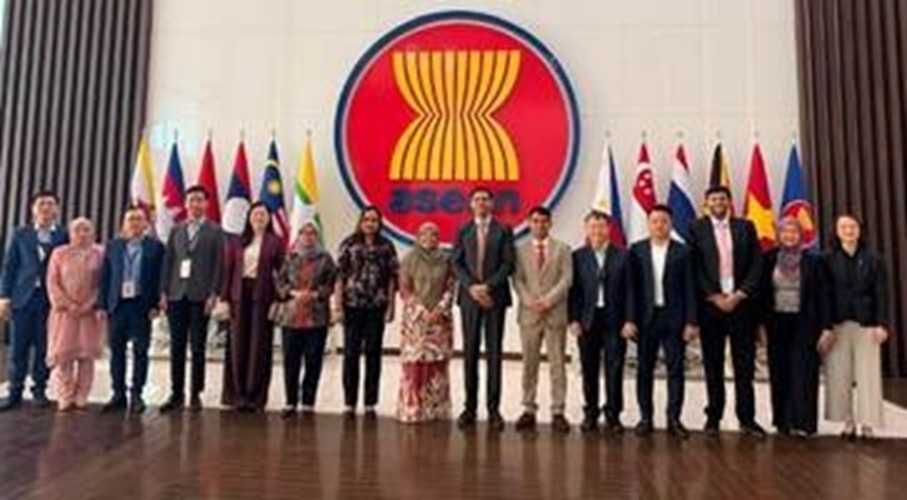
The 15th meeting of the AITIGA Joint Committee and related meetings took place at the ASEAN Secretariat in Jakarta, Indonesia, from October 6 to 9, 2026. The discussions were conducted in hybrid mode.
The meeting was co-chaired by Nitin Kumar Yadav, Additional Secretary in India’s Department of Commerce, Ministry of Commerce and Industry, and Mastura Ahmad Mustafa, Deputy Secretary General (Trade), Malaysia’s Ministry of Investment, Trade and Industry.
Delegations from Brunei, Cambodia, Indonesia, Lao PDR, Malaysia, Myanmar, the Philippines, Singapore, Thailand and Viet Nam participated.
According to the Ministry of Commerce and Industry’s PIB announcement, the Joint Committee directed all sub-committees to expedite pending chapters, establish firm and time-bound deliverables, and coordinate closely to achieve measurable progress.
The next Joint Committee meeting is scheduled for January 2027 in India, where delegates will review progress and provide further guidance towards concluding the negotiations.
Three Sub-Committees Hold Meetings Alongside the Joint Committee
Three of the eight AITIGA sub-committees held meetings alongside the 15th Joint Committee session.
| Sub-committee | Main area of work | Why it matters to businesses |
|---|---|---|
| Legal and Institutional Issues (SC-LII) | Legal provisions and institutional arrangements | Determines how the agreement is structured, interpreted and administered |
| National Treatment and Market Access (SC-NTMA) | Market access and treatment of goods | Can affect the conditions under which products enter partner markets |
| Rules of Origin (SC-ROO) | Criteria for determining a product’s origin | Influences eligibility for preferential tariff treatment |
The meetings provided a forum for further discussions and coordination. The PIB release does not announce completed agreements on these individual chapters.
The distinction is important: the review remains a negotiating process, and the practical benefits for traders will depend on the provisions eventually agreed and implemented.
The ASEAN–India Trade in Goods Agreement is the framework governing preferential trade in goods between India and ASEAN.
The agreement was signed in 2009. Its review is intended to modernise the framework and make it more effective, user-friendly and conducive to trade.
The review process includes negotiations across eight sub-committees dealing with areas such as:
- National Treatment and Market Access
- Rules of Origin
- Standards, Technical Regulations and Conformity Assessment Procedures
- Sanitary and Phytosanitary Measures
- Customs Procedures and Trade Facilitation
- Trade Remedies
- Economic and Technical Cooperation
- Legal and Institutional Issues
These areas influence different stages of international trade, from determining whether a product qualifies for preferential tariffs to ensuring that it meets applicable standards and clears Customs.
The agreement’s review is therefore not limited to tariff negotiations. It also concerns the rules and procedures through which goods move between markets.
India–ASEAN Trade Reaches US$128.38 Billion
India and ASEAN have a substantial existing trading relationship.
A September 24, 2026 PIB release reported that bilateral trade reached US$128.38 billion during 2025–26, with ASEAN accounting for approximately 10.55% of India’s total global trade.
That scale makes the AITIGA review relevant to a wide range of Indian businesses, including manufacturers, agricultural producers, commodity traders, exporters, importers and logistics operators.
However, the overall trade figure does not by itself show how much additional trade the revised agreement would generate. That would depend on the final terms, the products covered, the commercial response of businesses and conditions in international markets.
Rules of Origin are among the central issues under discussion.
These rules determine the circumstances in which a product qualifies as originating in a particular country for the purpose of preferential tariff treatment. The requirements can be particularly relevant where products contain imported inputs or undergo processing across multiple countries.
For an exporter, eligibility for preferential treatment may depend on whether the product meets the applicable origin criteria and whether the required documentation is available.
For an importer, the documentation and origin claim can affect whether preferential tariff treatment may be claimed under the agreement.
Customs authorities must apply the relevant rules, while Customs Brokers help traders prepare and manage the documentation required for clearance.
The final outcome of the Rules of Origin negotiations will therefore matter to businesses that source materials regionally, manufacture goods using imported inputs or export processed products into ASEAN markets.
The October meeting confirms that the Rules of Origin sub-committee met, but the PIB release does not specify the detailed changes under negotiation or any final agreement on particular origin rules.
Market Access and Standards Can Shape Trade Opportunities
The National Treatment and Market Access sub-committee is another important part of the review.
Market-access provisions influence the conditions under which goods enter partner markets. The practical effect of a revised agreement will depend on the products covered, the commitments made and the implementation arrangements.
Standards and technical regulations can also affect whether goods are accepted in an importing market. Agricultural and food products may face sanitary and phytosanitary requirements, while manufactured goods can be subject to product standards, testing and conformity-assessment procedures.
For businesses, preferential tariffs are only one part of the export calculation. Market access also depends on product compliance, certification, documentation, delivery reliability and the ability to compete on price and quality.
The final AITIGA outcome will need to be assessed against these practical requirements rather than tariff changes alone.
The AITIGA review has direct relevance to the businesses and infrastructure that support regional cargo movements.
The chain begins with a trader or manufacturer and extends through export documentation, Customs clearance, freight forwarding, logistics, ports and shipping services.
India’s export chain:
Trader / Manufacturer → Export Documentation → Customs Broker → Customs → Freight Forwarder / NVOCC → CFS / ICD → Logistics → Port / Terminal → Shipping Line → Overseas Buyer
India’s import chain:
Overseas Supplier → Shipping Line → Port / Terminal → Customs → Customs Broker → CFS / ICD → Logistics → Importer / Trader
If the reviewed agreement makes trade more commercially attractive, businesses may explore new markets or increase shipments. That could create additional cargo demand and affect shipping and logistics requirements.
However, the current meeting announcement does not establish that cargo volumes, vessel calls or freight demand have increased as a result of the negotiations. Such effects would need to be measured after the agreement’s final terms and implementation become clear.
What the Review Could Mean for Indian Businesses
| Stakeholder | Potential relevance of the AITIGA review | What needs to be established |
|---|---|---|
| Exporters | Preferential access to ASEAN markets | Final tariff commitments, origin rules and product eligibility |
| Importers | Access to products sourced from ASEAN | Applicable duties, origin compliance and import conditions |
| Manufacturers | Regional sourcing and market opportunities | Input eligibility, standards and supply-chain economics |
| Farmers and agricultural exporters | Potential opportunities in eligible products | Final market-access commitments and applicable SPS requirements |
| Customs Brokers | Origin documentation and preferential tariff claims | Final rules, procedures and documentary requirements |
| Freight Forwarders and NVOCCs | Coordination of regional cargo movements | Actual shipment demand and service requirements |
| CFSs and ICDs | Cargo handling and inland-maritime interfaces | Changes in containerised trade and cargo volumes |
| Ports and terminals | Gateway infrastructure for international cargo | Commodity and container throughput trends |
| Shipping lines | Regional cargo demand and service planning | Confirmed cargo flows and commercial demand |
| Overseas buyers | Access to Indian products under the final framework | Product eligibility, pricing and delivery reliability |
These are potential channels of impact. The negotiating meeting itself does not establish that any particular stakeholder has already received a commercial benefit.
Also Read: Edible Oil Import Duty Cut: Who Gets the Benefit — Importers, Refiners, Farmers or Consumers?
The Importance of Time-Bound Deliverables
The Joint Committee’s instruction to expedite outstanding chapters and establish time-bound deliverables indicates a focus on maintaining momentum in the review process.
The next meeting in January 2027 is intended to assess the progress made by the sub-committees and provide further guidance.
The key issue is whether the negotiating structure can convert discussions into agreed text and, ultimately, an implementable agreement.
The October release does not publish a chapter-by-chapter completion schedule, identify which specific provisions remain unresolved or provide a confirmed final conclusion date for the entire review.
Those details will be important in assessing progress beyond the number of meetings held.
MaritimeNews Insight
AITIGA’s review is a trade-policy process, but its consequences will eventually be experienced by businesses moving goods across borders.
The agreement’s practical value will depend on whether its final provisions provide clearer market access, workable origin rules and predictable procedures for importers and exporters.
For the maritime supply chain, the relevant question is whether these rules help businesses turn market opportunities into actual cargo movements.
That requires a chain of implementation: exporters must understand the agreement, products must qualify for the applicable treatment, documentation must be correct, Customs procedures must work, and freight and shipping services must be available at commercially viable costs.
The next Joint Committee meeting in January 2027 provides a scheduled opportunity to review progress. The substantive measure of progress will be the provisions agreed, their implementation and the experience of businesses using the revised framework.
What to Watch Before January 2027
- Sub-committee progress: Which pending chapters advance and which issues remain unresolved?
- Rules of Origin: Are clearer and workable criteria agreed for products using regional or imported inputs?
- Market Access: What changes, if any, are agreed for tariffs and product coverage?
- Customs Procedures: Do negotiations produce practical improvements in trade facilitation?
- Standards: How are technical, sanitary and phytosanitary requirements addressed in the broader review?
- Implementation: What timelines and procedures will businesses need to follow once changes are agreed?
- Trade data: Do subsequent import and export figures show changes that can be linked to the revised agreement, once implemented?
Frequently Asked Questions (FAQs)
What is the AITIGA Joint Committee?
It is the joint mechanism overseeing the review negotiations under the ASEAN–India Trade in Goods Agreement.
When and where was the 15th AITIGA Joint Committee meeting held?
It was held at the ASEAN Secretariat in Jakarta, Indonesia, from October 6 to 9, 2026, in hybrid mode.
Who co-chaired the meeting?
The meeting was co-chaired by Nitin Kumar Yadav, Additional Secretary in India’s Department of Commerce, and Mastura Ahmad Mustafa, Deputy Secretary General (Trade) of Malaysia’s Ministry of Investment, Trade and Industry.
What was decided at the meeting?
The Joint Committee directed all eight sub-committees to expedite pending chapters, establish firm time-bound deliverables and coordinate closely to achieve measurable progress. The release does not announce a completed revised agreement.
Which sub-committees met alongside the Joint Committee?
The sub-committees on Legal and Institutional Issues, National Treatment and Market Access, and Rules of Origin held meetings.
How much trade does India conduct with ASEAN?
India–ASEAN bilateral trade reached US$128.38 billion in 2025–26, according to a September 2026 PIB release.
When is the next meeting?
The next AITIGA Joint Committee meeting is scheduled for January 2027 in India.
How could the review affect shipping and logistics?
The final agreement could influence product eligibility, market access and trade procedures. Any resulting change in cargo demand, port activity or shipping services would need to be assessed using subsequent trade and logistics data.
Also Read: India’s Shipbuilding Modernisation Gets New Project Management Unit Under SbDS
The 15th AITIGA Joint Committee meeting has renewed the focus on resolving outstanding chapters in the review of the ASEAN–India Trade in Goods Agreement. With time-bound deliverables directed to all eight sub-committees and the next meeting scheduled for January 2027, the process is moving towards another assessment of negotiating progress.
For Indian businesses, the eventual significance will depend on the final terms governing market access, Rules of Origin, standards and trade facilitation. For the maritime sector, those terms will matter when they translate into real trade flows and cargo movements.
The next milestone is January 2027. The measure of progress will be what India and ASEAN have agreed by then, and how effectively businesses can use the resulting framework.
Sources
- PIB — 15th Meeting of ASEAN-India Trade in Goods Agreement Joint Committee held during 6–9 October 2026
- PIB — India–ASEAN Bilateral Trade Reaches US$128.38 Billion in 2025–26, September 24, 2026
- PIB — 13th AITIGA Joint Committee Meeting, July 2026
- PIB — 10th AITIGA Joint Committee Meeting, August 2025
- PIB — 6th AITIGA Joint Committee Meeting, November 2024
Make us preferred source on Google
Reporting by MaritimeNews Bureaus, Writing by Harpal S Naol; Editing by Jaspal Singh Naol.