

MARITIME NEWS DOSSIERS
THE COST OF SILENCE
Part I
The Sea Doesn’t Forgive Silence
Make us preferred source on Google
Editor’s Note
This opening Part does not examine individual documents, photographs or vessel-specific technical observations. Its purpose is to explain why Maritime News prepared this Dossier and to establish the professional framework within which the reporting marine engineer’s account and supporting material will be considered in the Parts that follow.
The engineering and safety-management principles discussed here are general. They do not constitute findings concerning any particular condition onboard MT Chapel, nor do they determine whether any allegation, deficiency or breach has been established.
Every major maritime casualty has a beginning. In many cases, that beginning is not a dramatic failure but a sequence of small indications whose significance becomes clear only in retrospect.
“The most consequential defect is not always the one that fails immediately. It may be the condition that remains unresolved long enough to be accepted as normal.”
Every Ship Has Two Histories
Every merchant vessel carries two related histories.
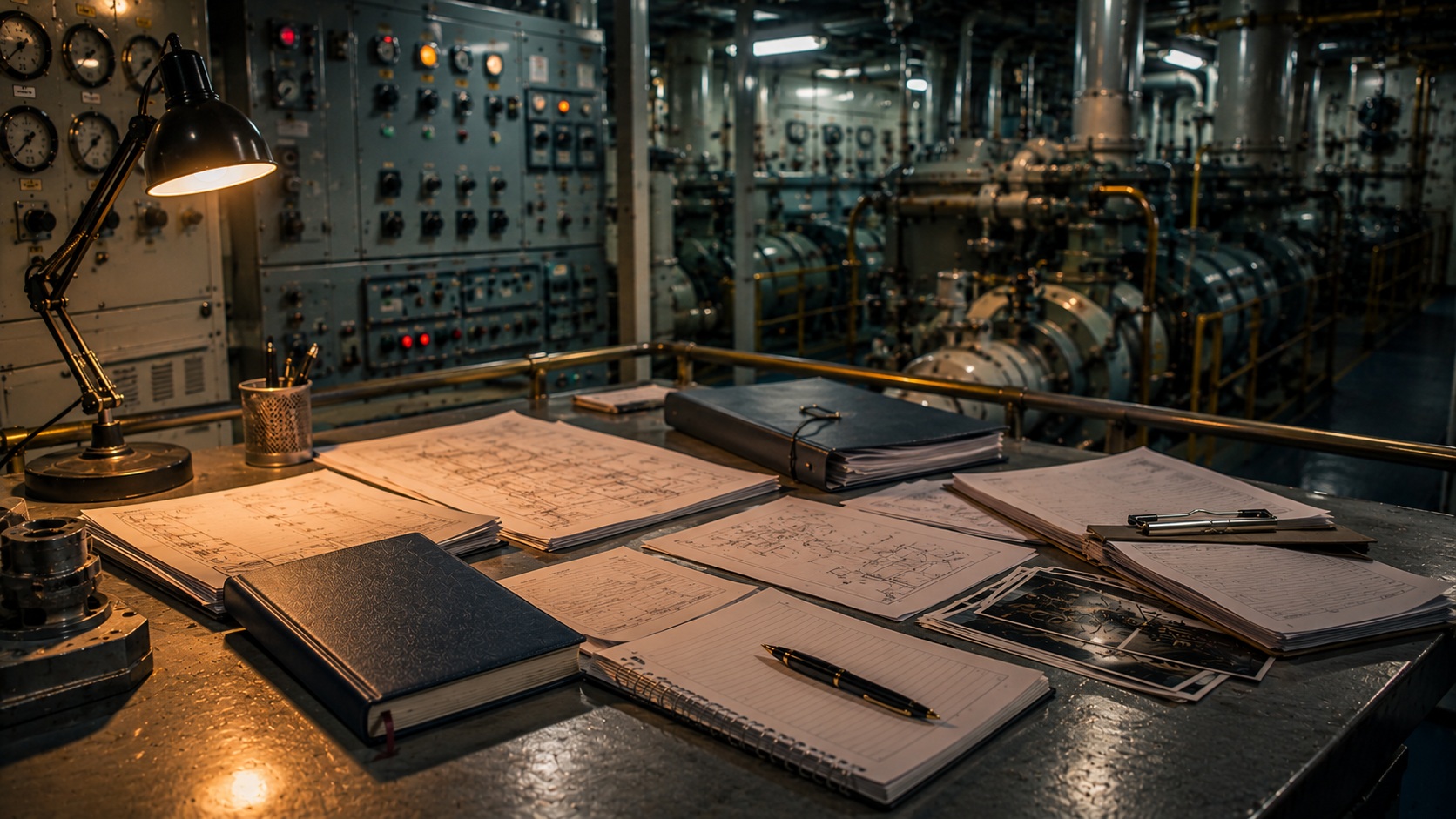
The first is its formal documentary record: statutory certificates, flag and class survey records, planned maintenance entries, safety-management procedures, official logbooks, defect reports and evidence of corrective action. These records provide the structured account through which compliance, maintenance planning and management control are demonstrated.
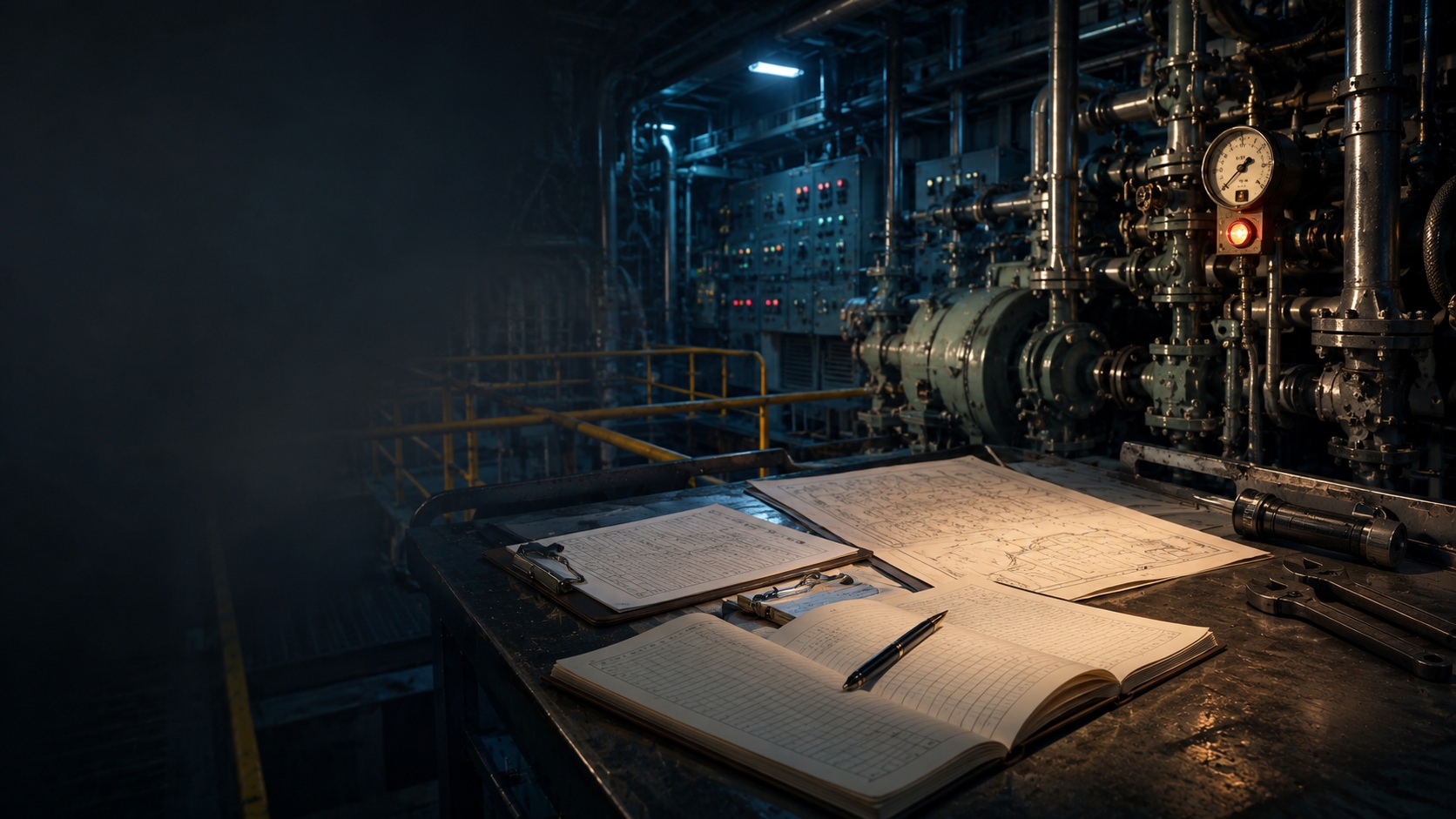
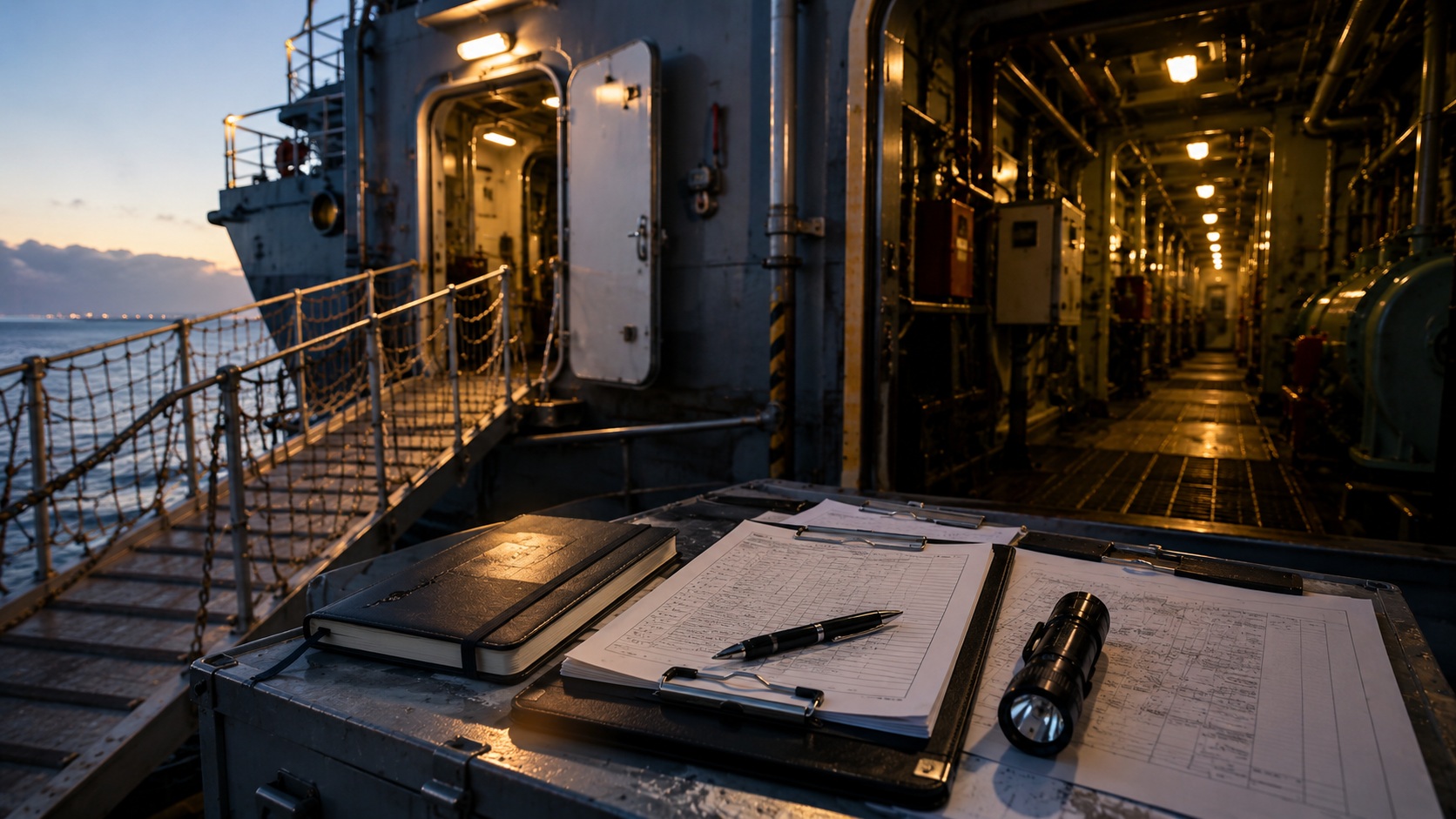
The second is the vessel’s lived operational history. It develops during engine-room watches, machinery rounds, toolbox meetings and discussions between seafarers who recognize changes in sound, temperature, leakage, vibration, performance or reliability. It is also reflected in requisitions awaiting approval, temporary measures adopted to preserve safe operation, accommodation conditions experienced by the crew, and contemporaneous notes or photographs retained by those directly involved.
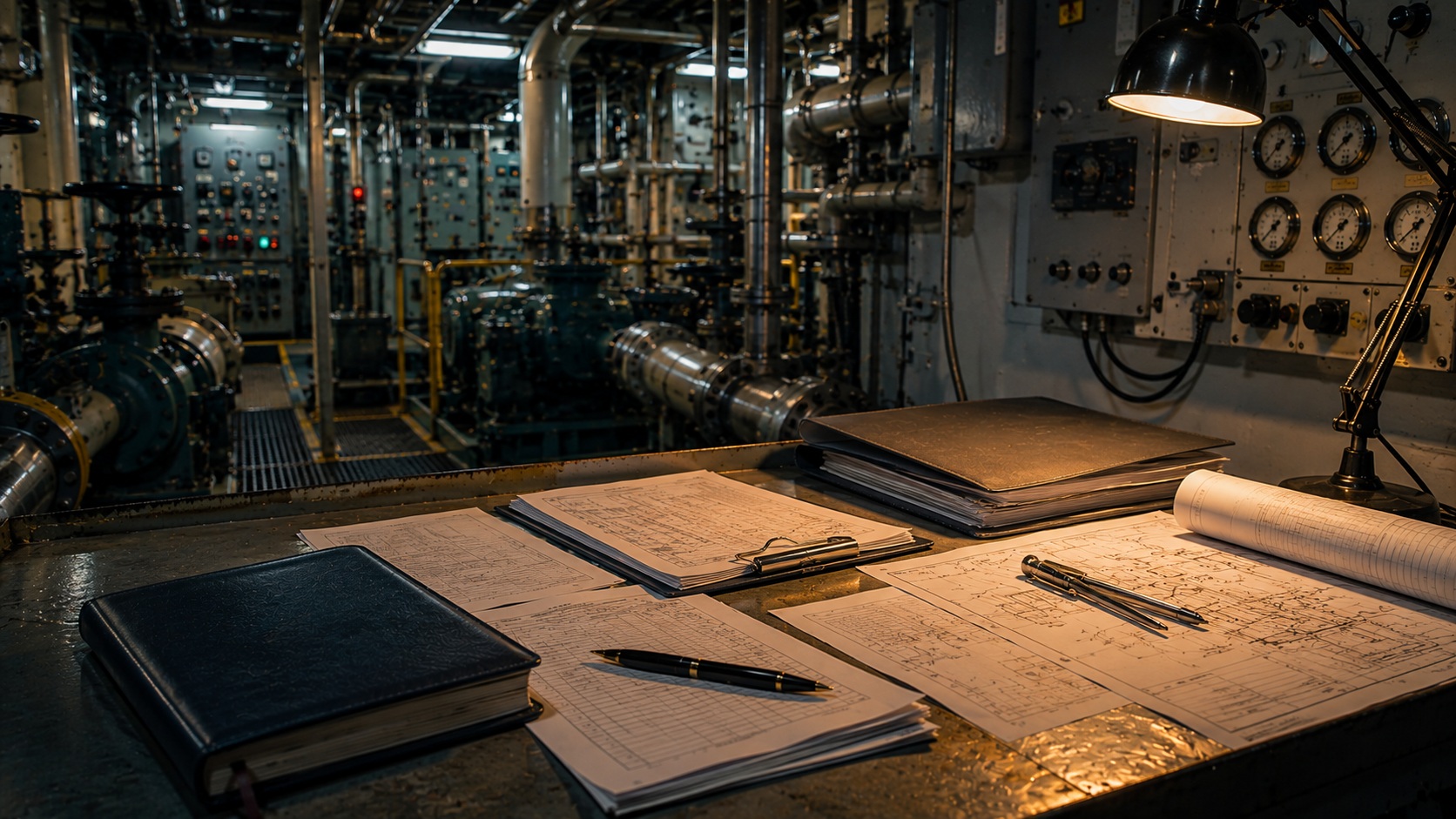
The formal record and operational experience should not be treated as competing versions of reality. Neither is complete when considered alone. A sound technical assessment examines the records together with actual equipment condition, outstanding defects, temporary controls, available redundancy and the evidence that corrective work was properly completed.
One history explains what the management system recorded. The other explains how the vessel was experienced in service. Together, they can provide a fuller account of shipboard operations.
The Profession Behind the Machinery
To many people ashore, a merchant vessel is primarily a means of transporting cargo. To a marine engineer, it is an integrated plant in which propulsion, electrical generation, fuel and lubrication systems, boilers, pumps, compressors, steering arrangements, alarms, safeguards and pollution-prevention equipment must remain available under demanding and continuously changing conditions.
A machinery problem at sea cannot always be deferred until normal business hours or external assistance becomes convenient. It may require immediate diagnosis, risk assessment and operational judgment using the people, spares, tools and redundancy available onboard.
Marine engineering responsibility therefore extends beyond restoring equipment to service. It includes monitoring developing conditions, assessing criticality, recording defects accurately, applying temporary controls where justified, communicating technical needs through established channels and verifying that corrective action has achieved the intended result.
That responsibility is shared across a wider system. Watchkeepers, the chief engineer, the master, shore-based superintendents, technical managers and company safety-management personnel each have roles in deciding how a reported condition is prioritized, resourced, escalated and closed. Reliable machinery depends not only on individual competence, but also on effective communication between ship and shore.
This professional discipline is one of the largely unseen foundations of global shipping.
When Temporary Becomes Routine
No vessel operates indefinitely without defects, deterioration or unplanned maintenance. Machinery ages, steel corrodes, seals leak, components wear and unexpected failures occur even where maintenance has been carefully planned.
The relevant measure is not whether a defect appears. It is how the condition is identified, assessed and controlled.
Temporary repairs and operational workarounds can be legitimate engineering responses. In some circumstances they are necessary to preserve safe operation until spares, specialist assistance or a suitable repair opportunity becomes available. Their acceptability depends on technical approval, documented limitations, risk assessment, monitoring requirements and a defined route to permanent rectification.
The concern begins when a temporary measure loses those controls. A repair may remain open without a realistic completion date. A requisition may be repeatedly deferred. A recurring alarm may be managed by routine intervention rather than removal of its cause. A known limitation may continue through successive operating cycles without a fresh assessment of risk.
Repeated successful operation can create false reassurance. The fact that equipment continued to function yesterday does not establish that the original safety margin remains unchanged today. This gradual acceptance of deviation rarely arrives with a single warning. It develops through a succession of individually defensible decisions that are not reconsidered as a whole.
One postponed repair may be manageable. One pending requisition may reflect legitimate operational priorities. One workaround may be supported by adequate safeguards. Collectively, however, unresolved conditions deserve periodic technical review to ensure that temporary control has not become unexamined routine.
Why Maritime News Opened This Dossier
Maritime News did not open this Dossier in response to a collision, grounding, fire, formally reported casualty or major pollution event.
The editorial process began after a reporting marine engineer, following completion of his service onboard MT Chapel (IMO 9254070), provided internal correspondence, photographs and written explanations relating to a defined period of his operational experience.
The existence of that material did not establish the accuracy of every statement, the duration or cause of every depicted condition, or responsibility for any alleged shortcoming. Nor did it answer every technical question. What it provided was an opportunity for disciplined examination.
The material raised broader questions about the interaction between planned maintenance, machinery reliability, defect reporting, shore support, crew welfare and professional engineering responsibility aboard a working merchant vessel.
Maritime News therefore chose not to begin with blame. It began with a preventive question:
Can a documented operational experience help the maritime community examine the management of weak signals before they become the subject of a casualty investigation, detention, machinery failure or serious welfare consequence?
That question became the foundation of The Cost of Silence. Reference to MT Chapel identifies the subject of the forthcoming documentary review; it does not constitute an adverse finding against the vessel, its owner, manager or crew.
A Dossier About Learning
This publication is an editorial investigation, not a statutory marine safety investigation, class survey, port State control inspection, flag-state proceeding or judicial determination. Those authorities and institutions perform distinct functions and possess powers that a publication does not.
The purpose of this Dossier is to examine one documented operational experience with technical context, evidentiary discipline and professional fairness. It seeks to understand how concerns were reportedly identified, recorded, communicated, answered and, where the available material permits, resolved.
The series will distinguish international conventions, flag-state implementation, classification requirements, company procedures and manufacturer guidance when technical standards are discussed. It will also distinguish verified information, documentary material, photographic content, attributed account and editorial analysis.
Every photograph, document, observation and editorial reflection included in the series must serve a defined public-interest purpose: to support learning without converting uncertainty into accusation.
Meaningful improvement often begins before a casualty. It begins when organizations are willing to examine weak signals, respond to technically reasoned concerns and verify that corrective action has been effective.
The Question That Guides This Dossier
Throughout preparation of this publication, one question remained constant.
Not simply: Who was right?
Not simply: Who was wrong?
But: What can the maritime industry learn?
That question requires more than accepting or rejecting one person’s account. It requires examination of equipment function, defect criticality, available redundancy, operating conditions, planned maintenance records, correspondence, escalation pathways, management responses and the limitations of the evidence itself.
A strong reporting culture is not measured only by whether a crew member can submit a concern. It is measured by whether the concern is acknowledged, assessed by competent persons, supported with resources, answered transparently and closed with evidence. It also recognizes that many conditions can be safely managed and that preventive attention does not mean every defect predicts a casualty.
If this Dossier encourages one operator to reassess an unresolved technical condition, one superintendent to improve defect follow-up, one master or chief engineer to strengthen reporting confidence, or one company to examine why weak signals were not converted into learning, it will have served a constructive purpose.
The sea rarely announces the beginning of a crisis through a single unmistakable event. More often, risk develops through small changes in equipment condition, margins, communication or organizational response. Recognizing, documenting and acting proportionately on those changes is a measure of professional maritime culture.
That is the subject this Dossier seeks to explore.
End of Part I
“Every voyage leaves evidence of what was learned and what was left unresolved. Whether those lessons remain confined to individual experience or contribute to safer shipping depends on the willingness of the maritime community to examine them fairly, technically and in context.”
Continue Reading
← Return to The Cost of Silence – Maritime News Dossier 001
Next Part
Part II – The Promise Before Boarding
“Every voyage begins with expectations.”
Make us preferred source on Google
Reporting Basis: General maritime engineering and safety-management principles, together with the editorial framework established for Maritime News Dossier 001. Part I does not examine individual documents, photographs or vessel-specific technical observations.
Verification Note: Part I establishes the professional and editorial framework for the Dossier. It does not constitute a finding concerning any particular condition onboard MT Chapel, nor does it determine whether any allegation, deficiency or breach has been established. Matters concerning the reporting marine engineer’s documented experience are examined in the Parts that follow.
Reporting by MaritimeNews Bureaus, Writing and Editing by Jaspal Singh Naol Technical review and revisions by Priyatham Sanjeeva Reddy Ramidi
One thought on “The Sea Doesn’t Forgive Silence”