
The 11th meeting of the National Traders’ Welfare Board reviewed GST, finance, digitalisation, grievance redressal and export promotion, with proposals aimed at improving the operating environment for traders and MSMEs.
Make us preferred source on Google
Key Takeaways
- The 11th meeting of the National Traders’ Welfare Board (NTWB) was held at Vanijya Bhawan, New Delhi, in hybrid mode on September 25, 2026.
- Discussions covered GST rationalisation, refund delays, lengthy audits, ITC anomalies and pending appeals.
- The Board discussed a proposal for a centralised loan portal with 30-day timelines, reforms in the CIBIL score mechanism and trader grievance helplines.
- Members proposed expanding ONDC and DigiDukaan to the district level and strengthening cyber-fraud redressal.
- Export participation by traders and MSMEs received specific attention, including awareness of export opportunities and stronger institutional support.
- The Board also discussed Centre–State coordination, timely payments to government contractors, technical penalties and loan repayment flexibility during lean periods.
- State Traders’ Welfare Boards have been established in Madhya Pradesh, Punjab, Uttar Pradesh and Tamil Nadu, while written confirmations from Goa and Telangana were noted.
- DigiDukaan, according to the PIB release, has more than 19,000 retailers live across Hyderabad and Jaipur.
- The meeting also discussed the India–UK CETA negotiations in the context of export promotion and forthcoming consumer-protection reforms.
Also Read: Edible Oil Import Duty Cut: Who Gets the Benefit — Importers, Refiners, Farmers or Consumers?
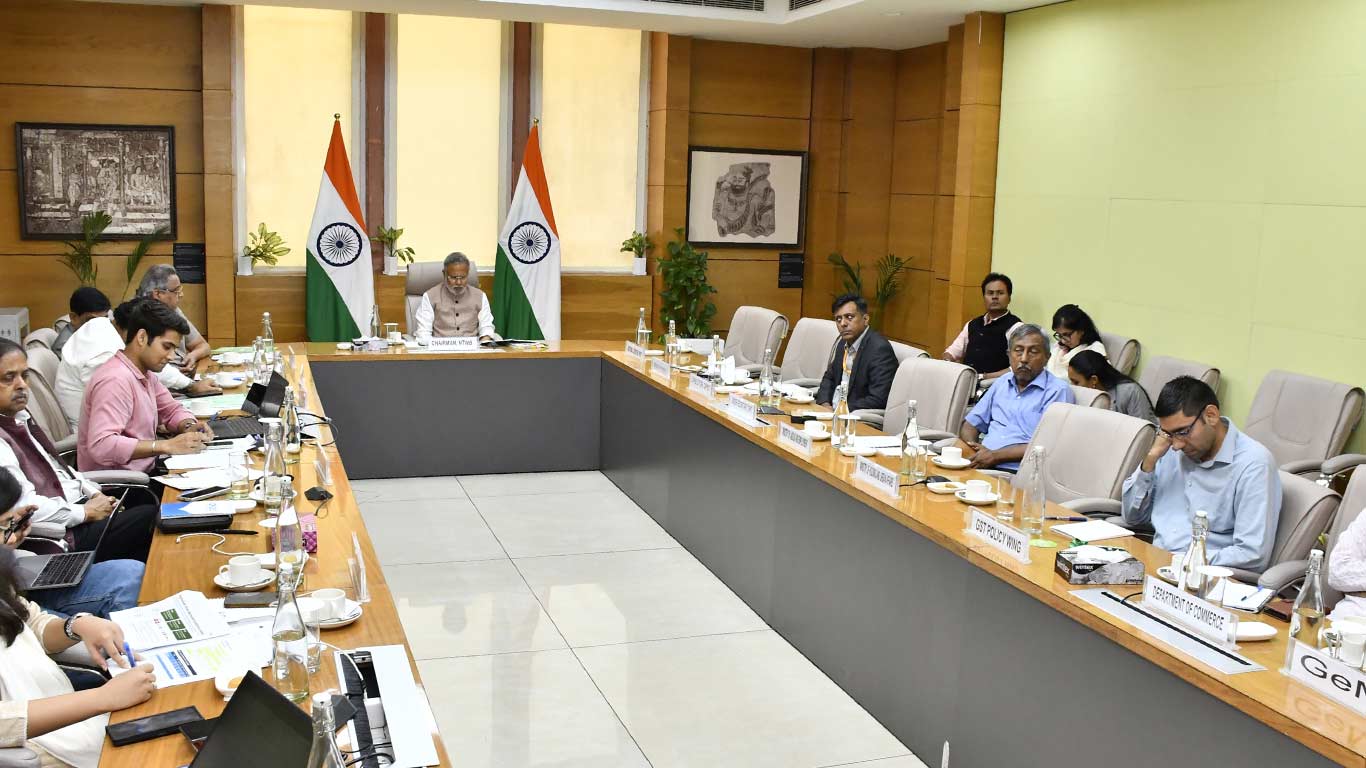
New Delhi, India, September 27, 2026 (Maritime News): The National Traders’ Welfare Board has reviewed a broad set of issues affecting India’s traders, retailers, manufacturers, exporters and service providers, placing tax administration, access to finance, digitalisation, grievance redressal and export participation at the centre of its latest deliberations.
The 11th meeting of the Board was convened at Vanijya Bhawan, New Delhi, in hybrid mode on September 25.
According to the Press Information Bureau release, the discussions covered trader welfare, Ease of Doing Business, digital empowerment, access to finance, Centre–State coordination and export promotion.
The meeting was chaired by Sunil Singhi, Chairman, National Traders’ Welfare Board.
GST Issues Remain a Major Concern
GST-related matters formed an important part of the discussions.
The Board considered issues including:
- GST rationalisation;
- delays in refunds;
- lengthy audits;
- amnesty schemes;
- anomalies involving Input Tax Credit;
- pending appeals.
For traders and MSMEs, these issues directly affect working capital and the predictability of business operations.
A delayed refund, prolonged audit or unresolved ITC issue can keep funds tied up even when the underlying business transaction has already taken place.
The meeting therefore brought taxation administration into the wider Ease of Doing Business discussion.
Also Read: India’s Shipbuilding Modernisation Gets New Project Management Unit Under SbDS
Finance and Credit Access: Proposed 30-Day Loan Portal
Access to finance was another major area discussed by the Board.
Members considered:
- inclusion of traders in MSME facilitation committees;
- a centralised loan portal with proposed 30-day timelines;
- reforms in the CIBIL score mechanism;
- trader grievance helplines.
The proposed centralised loan portal is particularly relevant to small traders and businesses that depend on timely working capital.
However, the PIB release describes these as proposals discussed by the Board, rather than announcing that a new 30-day loan entitlement has already been implemented.
That distinction is important for businesses assessing what has actually changed.
Traders Also Raise Payment and Penalty Issues
The Board discussed trader welfare measures concerning government-linked business and financial obligations.
These included:
- timely payments to government contractors;
- safeguards against technical penalties;
- relaxation in loan repayment during lean periods;
- stronger Centre–State coordination.
For smaller businesses, payment delays can create a chain reaction involving salaries, supplier payments, loan servicing and inventory procurement.
The discussion therefore extends beyond regulatory compliance to the broader question of cash-flow resilience for small businesses.
Also Read: Vadhavan Port Tender Advances as NAPM Demands Project Halt and Independent Impact Assessment
Digitalisation Moves Beyond Metropolitan Markets
The Board also examined the expansion of digital platforms.
Discussions covered the expansion of ONDC and DigiDukaan to the district level, along with measures relating to women’s entrepreneurship and cyber-fraud redressal.
The PIB release identifies DigiDukaan as an ONDC B2B procurement and Kirana digitisation initiative.
According to the release, more than 19,000 retailers are currently live across Hyderabad and Jaipur.
The proposed district-level expansion could potentially bring digital procurement and commerce infrastructure closer to smaller trading centres, although the meeting record itself does not establish a rollout timeline for every district.
Cyber Fraud and Grievance Redressal Enter the Trader Welfare Agenda
Digital expansion also brings another issue: digital risk.
The Board discussed strengthening cyber-fraud redressal mechanisms, alongside:
- trader grievance helplines;
- POSH cells for grievance redressal;
- Women Entrepreneurship Facilitation Desks under NITI Aayog.
This places digital protection and institutional grievance mechanisms alongside digital adoption.
For a small trader, moving from physical procurement to digital procurement changes not only the method of doing business but also the nature of disputes, fraud risks and documentation.
Export Promotion Becomes a Trader Issue
One of the more significant elements of the meeting for India’s wider trade ecosystem was the emphasis on increasing export participation by traders and MSMEs.
The Board discussed:
- greater awareness of export opportunities;
- stronger institutional support;
- measures to increase participation by traders and MSMEs;
- India’s emergence as a globally competitive trading nation.
This is particularly relevant because export policy is often discussed primarily through the lens of large manufacturers and established exporters.
Small traders and MSMEs can also participate in international trade, but doing so requires access to information, finance, documentation, compliance support, logistics and overseas market knowledge.
From Trader to Exporter: Where the Maritime Chain Begins
The moment a trader enters international commerce, the business becomes connected to a much larger supply chain.
A simplified export chain is:
Trader / Manufacturer → Export Documentation → Customs Broker → Customs → Freight Forwarder / NVOCC → CFS / ICD → Logistics → Port / Terminal → Shipping Line → Overseas Buyer
For imports, the chain operates in the opposite direction:
Overseas Supplier → Shipping Line → Port → Customs → Customs Broker → CFS / ICD → Logistics → Importer / Trader
This means the welfare of traders is not separate from the maritime logistics ecosystem.
A trader facing a GST refund delay may have a working-capital problem.
A trader entering exports may face a documentation or Customs-compliance challenge.
A small exporter may depend on a freight forwarder to arrange the international movement of cargo.
A shipment may then move through a CFS, ICD, port terminal and shipping line before reaching the overseas buyer.
Also Read: Kottayam Port Begins First Container Movement to Vizhinjam, Opening New Kerala EXIM Route
Customs Brokers and Freight Forwarders Are Critical to the Export Push
The Board’s focus on export participation has an important operational dimension.
For a first-time or small exporter, the international trade process can involve:
- product classification;
- export documentation;
- Customs compliance;
- Certificates of Origin;
- shipping documentation;
- freight booking;
- containerisation;
- port procedures;
- international transportation;
- foreign buyer requirements.
This is where Customs Brokers, freight forwarders, NVOCCs, CFSs, ICDs and logistics operators become important interfaces between the trader and the international supply chain.
Export promotion therefore cannot be measured only by the number of policies announced.
It also has to be reflected in whether a small trader can practically move goods from a domestic market to an overseas customer.
Centre–State Coordination Gets Greater Attention
The Board also reviewed institutional coordination between the Centre and States.
Sunil J. Singhi highlighted the establishment of State Traders’ Welfare Boards in Madhya Pradesh, Punjab, Uttar Pradesh and Tamil Nadu.
The meeting also noted written confirmations from Goa and Telangana, along with progress on District Facilitation Centres.
The Board also referred to 100 consecutive virtual conferences as an initiative intended to strengthen Centre–State engagement.
For traders operating across multiple States, coordination can be particularly important because business activity may involve central taxation and regulation alongside State-level permissions, local authorities and enforcement mechanisms.
Jan Vishwas and Ease of Doing Business
The Chairman highlighted the Government’s reforms relating to the Jan Vishwas Act, which the PIB release says rationalises 40,000 compliances.
The wider objective discussed at the meeting was to create an enabling environment for traders through policy and regulatory reforms.
The practical question for businesses, however, is how such reforms translate into day-to-day operations:
Fewer compliances → simpler procedures → lower administrative burden → faster transactions
The impact ultimately depends on implementation across departments and jurisdictions.
India–UK CETA Also Enters the Discussion
The Board also deliberated on the India–UK CETA negotiations, specifically in the context of export promotion.
For traders and MSMEs, trade agreements can create opportunities only when businesses are able to understand and use the resulting market-access provisions.
That requires awareness of:
- eligible products;
- tariff treatment;
- rules of origin;
- documentation;
- standards;
- certification;
- logistics;
- buyer requirements.
A trade agreement therefore becomes commercially meaningful at the level where an individual business can actually use it.
The Trader Is Connected to the Entire Trade Economy
The Board’s agenda brings together several parts of India’s economic system that are often considered separately.
Trader
Needs predictable taxation, finance and market access.
MSME
Needs working capital, compliance support and market opportunities.
Exporter
Needs documentation, Customs clearance, logistics and international market access.
Customs Broker
Handles the compliance interface at the border.
Freight Forwarder
Coordinates international cargo movement.
CFS / ICD
Connects inland cargo with the port and shipping network.
Logistics Operator
Moves the physical cargo.
Port / Terminal
Provides the gateway for international trade.
Shipping Line
Provides the maritime connection.
The health of one part of the chain can affect the others.
What the Board Discussed — and What Has Not Yet Been Announced
| Issue | Status in the PIB release |
|---|---|
| GST rationalisation | Discussed |
| GST refund delays | Discussed |
| Lengthy GST audits | Discussed |
| ITC anomalies | Discussed |
| Pending appeals | Discussed |
| Centralised loan portal | Proposal discussed |
| 30-day loan timeline | Part of proposal discussed |
| CIBIL reforms | Discussed |
| Trader grievance helplines | Discussed |
| ONDC district expansion | Discussed |
| DigiDukaan district expansion | Discussed |
| Cyber-fraud redressal | Discussed |
| Export participation | Emphasised |
| State Traders’ Welfare Boards | Established in four States; Goa and Telangana confirmations noted |
| District Facilitation Centres | Progress discussed |
| India–UK CETA | Discussed |
| Consumer Protection Amendment Bill 2026 | Forthcoming reform discussed |
This distinction matters because the meeting covered a mixture of existing initiatives, proposals, discussions and forthcoming reforms. The PIB release does not state that every proposal has already become an operational scheme.
Also Read: Modi’s BRICS Bilateral Push Deepens India’s Engagement Across Africa, ASEAN and Central Asia
The Last-Mile Question
The central issue for a trader is often much simpler than the policy language.
Can I get my refund?
Can I obtain a loan when I need it?
Can I resolve a tax dispute without prolonged delay?
Can I export my product without unnecessary procedural friction?
Can I access a digital marketplace outside a major city?
Can I obtain help when a shipment or payment becomes stuck?
These are the points at which policy becomes an actual business experience.
MaritimeNews Insight
The National Traders’ Welfare Board’s latest meeting is significant for the maritime trade ecosystem because traders are the cargo-demand side of the supply chain.
Without an importer or exporter, there is no commercial cargo requirement.
Without cargo demand, the subsequent chain — Customs clearance, freight forwarding, CFS/ICD operations, inland logistics, ports, shipping services and vessel deployment — has less business to serve.
The relationship can therefore be viewed as:
Trade → Cargo → Logistics → Ports → Shipping → Voyages → Maritime Employment
For exports, an enabling business environment can affect the entire chain from the trader’s warehouse to the ship.
For imports, the chain runs from the overseas supplier through the vessel and port before reaching the Indian trader or manufacturer.
The NTWB discussion therefore has relevance well beyond retail and trading establishments. It touches the operational foundations through which Indian goods enter and leave international markets.
Also Read: India and Vietnam Reaffirm Stronger Maritime and Defence Ties for Regional Security
What Happens Next?
The PIB release indicates that the Board intends to pursue its mandate through policy advocacy, digital empowerment, Ease of Doing Business reforms, social-security initiatives and stronger Centre–State coordination.
It also discussed thematic committees and focused working groups for sector-specific issues and structured policy recommendations.
The next measurable stage will be implementation:
- Which recommendations become formal policy?
- Which departments receive responsibility?
- What timelines are established?
- How are traders informed?
- How are grievances tracked?
- Which reforms reach district-level businesses?
- Does export participation actually expand among traders and MSMEs?
- Do Customs, logistics and finance processes become easier for smaller businesses?
Those questions will determine how the meeting’s recommendations translate into the operating environment faced by traders.
Also Read: Hormuz Crisis Reshapes Gulf Shipping: What It Means for Indian Trade, Freight and Seafarers
Frequently Asked Questions (FAQs)
What is the National Traders’ Welfare Board?
The National Traders’ Welfare Board is an institutional forum dealing with issues concerning trader welfare and the business environment, including Ease of Doing Business, finance, digital empowerment, grievance redressal and export participation.
What was discussed at the 11th NTWB meeting?
The meeting covered GST issues, finance and MSME facilitation, trader welfare, digital platforms, cyber-fraud redressal, Centre–State coordination and export promotion.
Was a 30-day loan facility approved?
The PIB release says a proposal for a centralised loan portal with 30-day timelines was discussed. It does not state that a universal 30-day loan facility has already been implemented.
Which States have established State Traders’ Welfare Boards?
The PIB release identifies Madhya Pradesh, Punjab, Uttar Pradesh and Tamil Nadu as having established State Traders’ Welfare Boards. Written confirmations from Goa and Telangana were also noted.
What is DigiDukaan?
The PIB release describes DigiDukaan as a B2B procurement and Kirana digitisation initiative by ONDC. It states that more than 19,000 retailers are currently live across Hyderabad and Jaipur.
How is the meeting relevant to exporters?
The Board specifically discussed increasing export participation by traders and MSMEs, awareness of export opportunities and stronger institutional support.
Why is this relevant to maritime trade?
Export and import activity generates cargo that moves through Customs, freight forwarders, CFSs/ICDs, logistics networks, ports, terminals and shipping lines. Measures affecting traders can therefore influence the wider trade and maritime supply chain.
The 11th meeting of the National Traders’ Welfare Board brought taxation, finance, digital commerce, grievance redressal, Centre–State coordination and export promotion into one trader-focused policy discussion.
For India’s trading community, the significance of these discussions will ultimately depend on implementation.
For the maritime and logistics sector, the export-promotion component is particularly relevant because traders and MSMEs represent an important source of cargo demand.
The next stage is therefore not simply about what was discussed at Vanijya Bhawan.
It is about which recommendations become policy, which agencies act on them, what timelines are established, and whether the resulting changes can be experienced by a trader, exporter or MSME at the point where business actually happens.
Primary Source
Press Information Bureau — 11th Meeting of National Traders’ Welfare Board Convened in New Delhi
Make us preferred source on Google
Reporting by MaritimeNews Bureaus, Writing by Harpal S Naol; Editing by Jaspal Singh Naol.