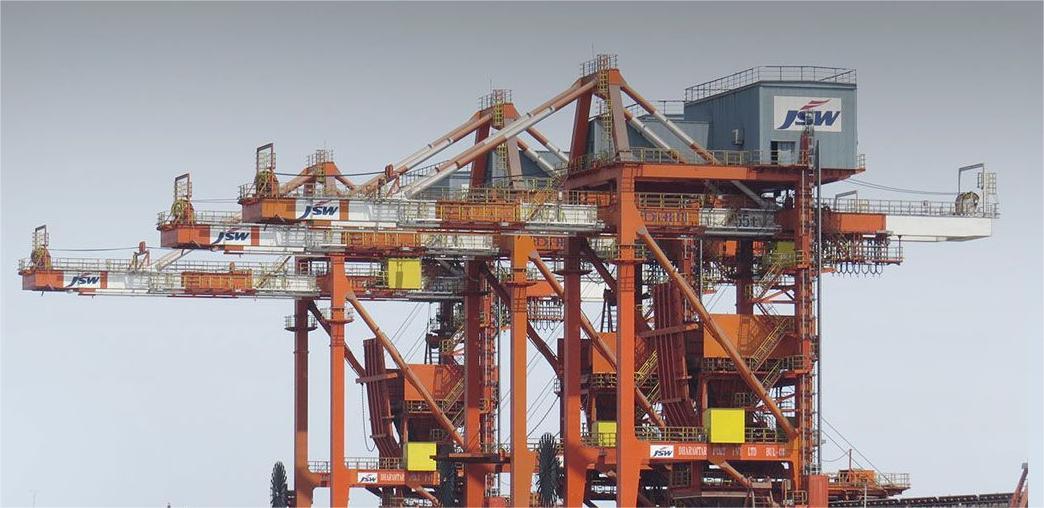

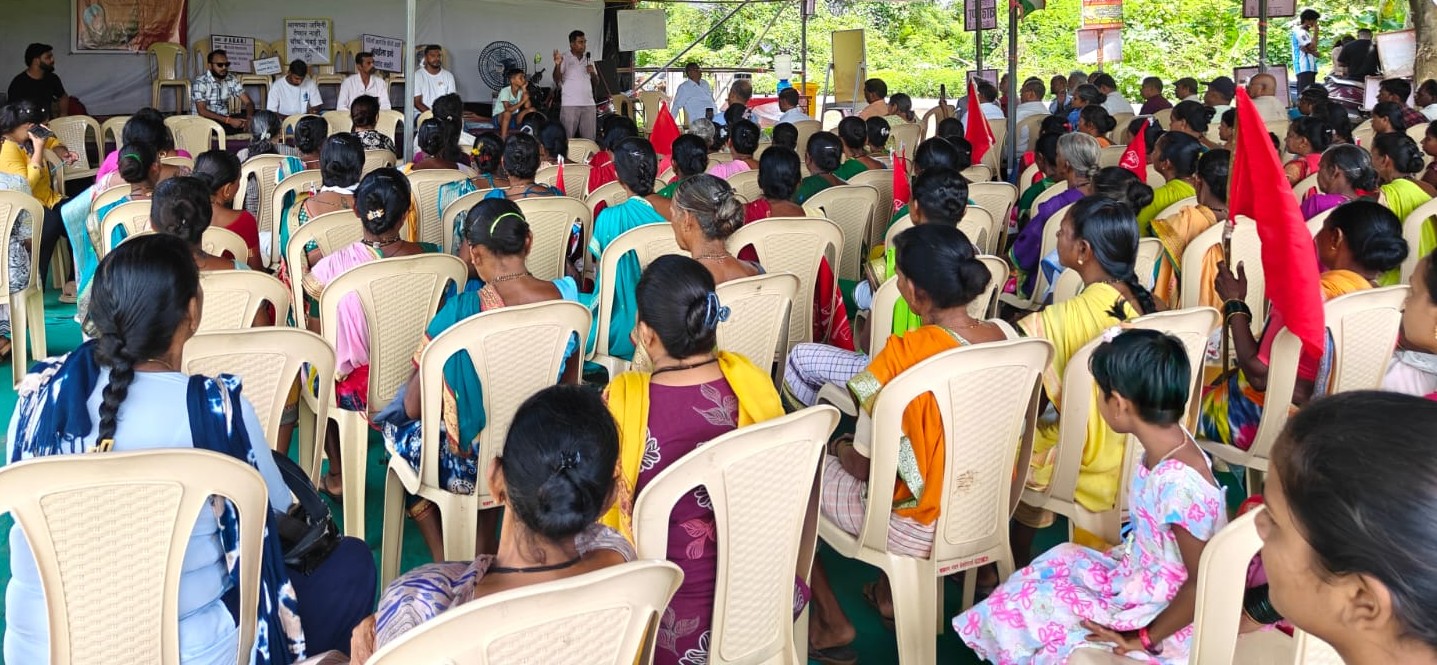
The ₹22,323.47-crore offshore protection-bund tender for Maharashtra’s Vadhavan Port has been extended to September 23 after bids from DP World and a Royal Boskalis–NMDC Dredging & Marine joint venture. At the same time, the National Alliance of People’s Movements (NAPM) has called for the project and related infrastructure works to be stopped, citing concerns over fisherfolk livelihoods, Adivasi land and forests, agriculture, biodiversity and the wider impact on Palghar’s coastal communities.
Make us preferred source on Google
Key Takeaways
- Vadhavan Port Project Ltd (VPPL) has extended the bid deadline for its ₹22,323.47-crore offshore protection-bund package to 3 PM on September 23, 2026. (@theweek)
- DP World and a Royal Boskalis–NMDC Dredging & Marine joint venture have submitted bids for the package. (ETInfra.com)
- The package involves dredging, reclamation and construction of the offshore protection bund and is being tendered under the Hybrid Annuity Mode (HAM) within a PPP structure. (ETInfra.com)
- The overall Vadhavan Port project was approved at an estimated ₹76,220 crore, including land acquisition, with planned capacity of 298 million tonnes per annum. (Press Information Bureau)
- NAPM says it stands with the Vadhavan Bandar Virodhi Sangharsh Samiti, fisherfolk, Adivasis and other local communities opposing the project. (Countercurrents)
- NAPM has issued eight specific demands, including stopping the project and tree-felling, an independent cumulative impact assessment, independent verification of the claimed sea depth, protection of traditional fishing livelihoods and Adivasi rights, and locally focused development.
- MaritimeNews has previously reported that the greenfield connectivity corridor itself is facing land-acquisition hurdles involving boundaries, trees, ownership records and pending legal issues. (Maritime News)
- Palghar authorities have also imposed restrictions on unlawful gatherings around parts of the project site amid opposition from sections of local residents. (Moneycontrol)
Vadhavan, Dahanu, Palghar, Maharashtra, India, September 23, 2026 (Maritime News): The Vadhavan Port project in Maharashtra’s Palghar district is moving deeper into its implementation phase. The latest development is the extension of the bidding deadline for the ₹22,323.47-crore offshore protection-bund package to 3 PM on September 23.
The extension came after DP World and a joint venture between Royal Boskalis B.V. and NMDC Dredging & Marine submitted bids. The tender covers dredging, reclamation and construction of the offshore protection bund under the Hybrid Annuity Mode. (@theweek)
But alongside the contracting process, local communities and organisations continue to raise questions about what the project means for their land, livelihoods, forests, coastline and future.
For NAPM, those questions are now accompanied by a specific set of demands.
Also Read: : Before India Maps “Vacant” Port Land, Who Will Map the People, Rights and Nature on It?
Fisherfolk, Adivasis, Farmers and Local Communities at the Centre
The National Alliance of People’s Movements (NAPM) says its representatives met fisherfolk, Adivasis, farmers, workers, landless people and other affected communities in the Vadhavan area on September 19 and 20.
NAPM says the local movement is continuing through the Vadhavan Bandar Virodhi Sangharsh Samiti and that its concerns extend beyond the proposed port itself to the wider transformation of the coastal region. (Countercurrents)
The organisation’s latest statement identifies its representatives as:
- Sanjay Mangala Gopal — National Convenor
- Suniti S. R. — National Convenor
- Sujay More — Maharashtra State Convenor
- Sirat Satpute — Maharashtra State Convenor
The statement also names Prasad Chacko, Pranjali Tripathi, Adv. Mini Mathew, Siddharth Chakravarti, Sakshi Samant, Nandkumar Pawar, Ramesh Koli, Mangesh Koli, Mayur Koli, Dhananjay Shinde and Rajshree Shinde among its members/supporters. (Countercurrents)
NAPM says it stands with the Vadhavan Bandar Virodhi Sangharsh Samiti and the fisherfolk, Adivasi communities and other local communities opposing the project. (Countercurrents)
These are NAPM’s positions and demands; they should be distinguished from independently established findings and from the Government’s stated development objectives.
NAPM’s Eight Demands
NAPM’s latest statement sets out a detailed list of demands.
1. Stop the Vadhavan Port project
NAPM has demanded that the Vadhavan Port project be scrapped immediately.
2. Stop tree-felling and related infrastructure work
It has also called for an immediate halt to tree-felling and other infrastructure works associated with the project.
3. Conduct an independent cumulative impact assessment
NAPM wants an independent and transparent cumulative impact assessment, with participation from:
- local fisherfolk;
- Adivasis;
- farmers; and
- women.
The demand goes beyond assessing individual components separately and asks for the combined impact of the port and associated infrastructure to be examined. (Countercurrents)
4. Independently verify the sea depth
NAPM has called for an independent remeasurement of sea depth, including verification of the reported 20-metre depth.
It wants the exercise to be public and conducted in the presence of local communities. (Countercurrents)
The Government has separately referred to offshore areas near the proposed port site where construction sand is located at depths ranging from 20 to 25 metres. That is a different factual reference and should not automatically be treated as verification of the exact navigational depth at the proposed port site. (Press Information Bureau)
5. Protect traditional fishing livelihoods
NAPM says generations-old fishing livelihoods should not be destroyed in the name of compensation or alternative employment.
The demand therefore focuses not only on financial compensation but on whether traditional fishing can continue. (Countercurrents)
6. Protect Adivasi land and legal rights
NAPM has demanded protection of Adivasi land and forests and specifically referred to legal rights under PESA — the Panchayats (Extension to Scheduled Areas) Act. (Countercurrents)
7. Protect the local ecosystem
NAPM has questioned the use of afforestation in distant districts as compensation for destruction or diversion of local forests.
Its demand is for protection of the ecosystem in the project area itself. (Countercurrents)
8. Prioritise locally needed development
NAPM has opposed what it describes as uncontrolled urbanisation associated with the idea of a “Fourth Mumbai”.
Instead, it has called for development based on local needs, including:
- schools;
- colleges;
- hospitals;
- healthcare;
- agricultural and horticultural markets; and
- dignified employment for young people in the region. (Countercurrents)
Also Read: India Moves to Build a Global Hub for Ship Ownership, Leasing and Maritime Finance Through GIFT City
NAPM: This Is About More Than One Port
NAPM’s statement says the Vadhavan people’s movement is not a struggle against one port alone.
It describes the movement as an effort to defend:
the coastline, fisherfolk, Adivasi communities, agriculture, forests and biodiversity. (Countercurrents)
NAPM also says local people do want development, but want development that addresses their own needs.
The organisation points to demands for schools, colleges, hospitals, healthcare, better markets for agriculture and horticulture, facilities and fair prices for fisherfolk, and dignified employment for local youth. (Countercurrents)
That position is important to report because it provides a more specific description of what the organisation says it wants instead of reducing the dispute simply to “pro-development versus anti-development.”
The Port’s Development Case
The Union Government has presented Vadhavan as a major addition to India’s maritime infrastructure.
The project was approved in June 2024 at an estimated total cost of ₹76,220 crore, including the land-acquisition component.
The port is being developed through Vadhavan Port Project Ltd (VPPL), a special purpose vehicle of Jawaharlal Nehru Port Authority (JNPA) and the Maharashtra Maritime Board (MMB), with a 74:26 shareholding. (Press Information Bureau)
The Government projects a total cargo-handling capacity of 298 million tonnes per annum and says Vadhavan is intended to improve Maharashtra’s maritime infrastructure, trade competitiveness, logistics efficiency, industrial development and employment generation. (Press Information Bureau)
The Government has also described the project as an all-weather greenfield deep-draft Major Port capable of accommodating large mainline vessels. (Press Information Bureau)
The ₹22,323.47-crore tender currently moving through the bidding process is therefore one component of the larger ₹76,220-crore project, not the total project cost. (ETInfra.com)
Also Read: Cochin Shipyard and Drydocks World Sign 50:50 JV to Build India’s Global Ship Repair Ambition
Two Major Bids for the Offshore Package
The latest tender development involves two submitted bids.
DP World, through its Indian operations, has entered the process.
The second bid has been submitted by a joint venture between Royal Boskalis B.V. and NMDC Dredging & Marine. (ETInfra.com)
ETInfra reported that the package involves dredging, reclamation and construction of the offshore protection bund.
The publication also reported that the tender deadline had been extended from September 17 to September 23, with JNPA Deputy Chairman Ravish Kumar Singh saying the extension was intended to facilitate wider participation in a project of this scale. (ETInfra.com)
The Connectivity Story Is Already Being Reported by MaritimeNews
The port cannot function as an isolated offshore structure.
Its success depends on connectivity to the hinterland.
MaritimeNews reported on September 9 that the Vadhavan greenfield connectivity corridor was facing land-acquisition challenges involving:
- boundary and survey discrepancies;
- disputed tree compensation;
- revenue-record gaps;
- ownership issues; and
- pending court cases.
Our earlier report also examined the distinction between physical possession, revenue records, survey numbers, land assets and compensation. (Maritime News)
Related MaritimeNews report:
Vadhavan Port’s Greenfield Connectivity Hits Land-Acquisition Hurdles Over Boundaries, Trees and Ownership Records
This continuity matters.
The current tender story should not be read as though the community and land questions have suddenly appeared because of the latest bidding round.
They are part of an ongoing implementation process.
Land Acquisition Is Not the Same as Livelihood Impact
The connectivity corridor illustrates why the people-first assessment cannot stop with land acquisition.
A land parcel can be acquired and compensated.
But a person’s livelihood may depend on something else.
For example:
A farmer → land + trees + water + market access
A fisher → sea access + fishing grounds + landing facilities + markets
A local worker → access + employment + transport
An Adivasi family → land + forest + community rights + traditional resource access
Therefore:
Compensation paid does not automatically mean every livelihood impact has been resolved.
This is particularly relevant to NAPM’s demand that traditional fishing should not simply be replaced by compensation or alternative employment. (Countercurrents)
The Connectivity Corridor Has Its Own Land and Environmental Questions
The broader Vadhavan connectivity programme has also generated documented land and environmental concerns.
Land Conflict Watch’s record on the connectivity corridor identifies 606 hectares of affected land, 1,086 households and 5,214 people.
Its record includes concerns related to forest diversion, ecological risk and displacement. Those figures relate to the connectivity-corridor conflict record, and should not be presented as the number of people affected by the entire Vadhavan Port project.
This distinction is important when reporting the project’s human impact.
The Law-and-Order Dimension
The project has also seen a law-and-order response.
In July, Palghar authorities issued prohibitory orders around parts of the Vadhavan project site following opposition from a section of local residents.
The order, issued by Assistant District Collector Vishal Khatri under Section 163 of the Bharatiya Nagarik Suraksha Sanhita, restricted unauthorised entry and unlawful gatherings within a 500-metre radius of specified acquired land and access-road construction areas in Kolvali, Vangaon, Bavda, Tanashi, Chinchani and Varor.
The order was reported to remain in force until September 25. Reclamation work was underway and a 2-km access road from Varor-Chinchani to the coastline was being constructed for movement of construction material. (Moneycontrol)
This is a factual administrative action. It should not, by itself, be interpreted as establishing the validity of either the project’s or the protesters’ broader claims.
The Development Question Is Now at Ground Level
The Vadhavan debate has reached a stage where national infrastructure objectives and local consequences are meeting on the ground.
At the national level, the Government’s stated objectives include:
- deep-draft port capacity;
- increased cargo handling;
- improved logistics;
- international trade connectivity;
- industrial development; and
- employment. (Press Information Bureau)
At the local level, communities and organisations are raising questions about:
- fishing;
- land;
- forests;
- agriculture;
- sea depth;
- coastal ecology;
- access;
- compensation;
- rehabilitation;
- local employment;
- and the nature of future urbanisation. (Countercurrents)
Both sets of facts need to remain visible.
Also gRead: Paradip Port Authority’s New Leadership Push: State Coordination, Rail Connectivity and Deep-Draft Expansion
Stakeholder Impact
| Stakeholder | Question that needs an evidence-based answer |
|---|---|
| Fisherfolk | What happens to traditional fishing grounds, access, income and markets? |
| Adivasi communities | Are land, forest and applicable statutory rights protected? |
| Farmers | Are land, trees, crops, water and access correctly assessed? |
| Landowners | Are boundaries, ownership and compensation records accurate? |
| Women | Are their specific livelihood and social impacts included in assessment? |
| Local workers and youth | What employment will actually reach affected villages? |
| Local residents | How will roads, construction and urbanisation affect daily life? |
| Environment | What happens to forests, mangroves, coastline and marine ecology? |
| VPPL/JNPA/MMB | Can implementation proceed while statutory and community concerns are addressed? |
| Palghar administration | Can acquisition and construction proceed with transparent grievance resolution? |
| Maharashtra Government | How will local development benefits be measured? |
| Union Government | How will national maritime objectives be balanced with local safeguards? |
The Last Affected Person Test
For a project of this scale, the key measure cannot be only:
How much money has been invested?
or:
How much land has been acquired?
It should also ask:
Has every affected person been identified?
Has the exact land boundary been verified?
Have trees, structures and other assets been recorded?
Has compensation been correctly determined?
Has applicable rehabilitation been addressed?
Has livelihood impact been assessed separately from land ownership?
Has fishing access been addressed?
Have Adivasi rights been examined where applicable?
Can affected people challenge an incorrect decision?
Can the Government demonstrate what changed for the last affected household?
That is where the people-first test becomes measurable.
Also Read: Mormugao Port: From Iron-Ore Gateway to Multi-Commodity Port
MaritimeNews Insight
Vadhavan is now moving simultaneously on two tracks.
The infrastructure track
Tender → contractor → dredging → reclamation → protection bund → connectivity → port
The people’s track
Land → livelihood → consultation → compensation → rehabilitation → access → environment → employment
The credibility of the development process will ultimately depend on whether these two tracks are able to move together.
NAPM is demanding that the port project and related infrastructure works be halted and that an independent cumulative assessment be undertaken. (Countercurrents)
The Government, meanwhile, presents Vadhavan as a strategic deep-draft port intended to expand cargo capacity and strengthen India’s maritime and logistics infrastructure. (Press Information Bureau)
The responsibility of reporting is therefore not to decide between those positions.
It is to establish, with evidence:
What is being built?
Who is affected?
What has been promised?
What has actually been delivered?
What has changed on the ground?
And who remains unresolved?
What MaritimeNews Will Watch
The September 23 tender deadline is only the immediate milestone.
The continuing Vadhavan story requires tracking:
- Final bidders and tender outcome.
- Dredging and reclamation progress.
- Land acquisition and possession.
- Boundary and ownership disputes.
- Tree and asset verification.
- Compensation actually paid.
- Rehabilitation and livelihood measures.
- Fisherfolk compensation and access.
- Adivasi rights and applicable statutory safeguards.
- Forest and environmental compliance.
- Connectivity-corridor progress.
- Local employment created.
- Grievances filed and resolved.
- Whether the promised development benefits reach Palghar communities.
Also Read: Development of Non-Major Ports in India through Convergence
Frequently Asked Questions
What is the latest Vadhavan Port tender?
VPPL has extended the bid deadline for the ₹22,323.47-crore offshore protection-bund package to 3 PM on September 23, 2026. (@theweek)
Who has submitted bids?
DP World and a Royal Boskalis–NMDC Dredging & Marine joint venture have submitted bids. (ETInfra.com)
Is ₹22,323.47 crore the total cost of Vadhavan Port?
No. The overall project was approved at ₹76,220 crore, including land acquisition. (Press Information Bureau)
What is the Government’s stated objective?
The Government says Vadhavan is intended to increase deep-draft port capacity and improve maritime infrastructure, trade competitiveness, logistics efficiency, industrial development and employment. (Press Information Bureau)
Who is opposing the project?
NAPM says it stands with the Vadhavan Bandar Virodhi Sangharsh Samiti, fisherfolk, Adivasis and other local communities opposing the project. (Countercurrents)
Who are the named NAPM representatives?
The latest statement names Sanjay Mangala Gopal, Suniti S. R., Sujay More and Sirat Satpute as national and Maharashtra state convenors, along with other named members/supporters. (Countercurrents)
What does NAPM want?
Its eight demands include stopping the project and tree-felling, an independent cumulative impact assessment, independent sea-depth verification, protection of traditional fishing livelihoods and Adivasi rights, local ecosystem protection, and development based on local needs. (Countercurrents)
Has MaritimeNews previously reported on Vadhavan?
Yes. MaritimeNews reported on September 9 that the project’s greenfield connectivity was facing land-acquisition hurdles involving boundaries, trees and ownership records. (Maritime News)
Have authorities restricted gatherings near the project?
Yes. Palghar authorities issued prohibitory orders in July covering specified project and access-road areas amid opposition from sections of local residents. (Moneycontrol)
Also Read: India Trade Deficit Widens Despite Strong Export Growth
The Vadhavan Port project is moving forward on its infrastructure timetable, with the ₹22,323.47-crore offshore protection-bund tender now scheduled to close at 3 PM on September 23 after bids from DP World and the Royal Boskalis–NMDC Dredging & Marine JV. (@theweek)
But alongside the tender process is a continuing people’s movement.
NAPM and the Vadhavan Bandar Virodhi Sangharsh Samiti are demanding a halt to the project and related works, an independent cumulative impact assessment, verification of sea-depth claims, protection of traditional fishing livelihoods, protection of Adivasi rights and forests, and development based on the needs of local people. (Countercurrents)
The Government’s stated position remains that Vadhavan is a strategic deep-draft port intended to strengthen India’s maritime infrastructure, trade, logistics, industrial development and employment. (Press Information Bureau)
Meanwhile, MaritimeNews has already documented land-acquisition challenges in the project’s connectivity corridor, including questions around boundaries, trees and ownership records. (Maritime News)
The next phase therefore needs to be watched not only through the tender and construction calendar, but through the lives of the people living around the project.
The port’s progress will be measured in tonnes, berths, containers and kilometres.
Its impact on Palghar will be measured in land, livelihoods, fishing grounds, forests, access, compensation, employment and the lives of the people who remain there.
For MaritimeNews, both measurements belong in the same story.
Sources
- National Alliance of People’s Movements (NAPM) statement — Vadhavan Port project, community concerns and eight demands.
Countercurrents — NAPM Statement on Vadhavan Port - Sabrang India — Report on NAPM’s position and its engagement with Vadhavan communities.
Sabrang India — Vadhavan Port and Community Concerns - Pudhari — ₹22,323.47-crore Vadhavan Port tender and extension of the bidding deadline to September 23.
Pudhari — Vadhavan Port Tender Deadline Extended - The Week — Vadhavan Port development update and tender extension following bids.
The Week — Vadhavan Port Development Update - ETInfra / The Economic Times — HAM tender, bidders and project development.
ETInfra — Vadhavan Port HAM Tender and Bids - Land Conflict Watch — Vadhavan connectivity corridor, land, forest diversion, ecological and displacement concerns.
Land Conflict Watch — Vadhavan Connectivity Corridor - Moneycontrol — Palghar prohibitory orders and developments around the Vadhavan project site.
Moneycontrol — Prohibitory Orders Near Vadhavan Port Site - Press Information Bureau, Government of India — Union Cabinet approval and Vadhavan Port project details.
PIB — Vadhavan Port Project Approval - Press Information Bureau, Government of India — Government’s stated objectives and development rationale for Vadhavan Port.
PIB — Vadhavan Port Development - MaritimeNews — Previous Report — Greenfield connectivity corridor and land-acquisition issues involving boundaries, trees and ownership records.
MaritimeNews — Vadhavan Port Greenfield Connectivity Land Acquisition Hurdles
Make us preferred source on Google
Reporting by MaritimeNews Bureaus, Writing by Harpal S Naol; Editing by Jaspal Singh Naol.